

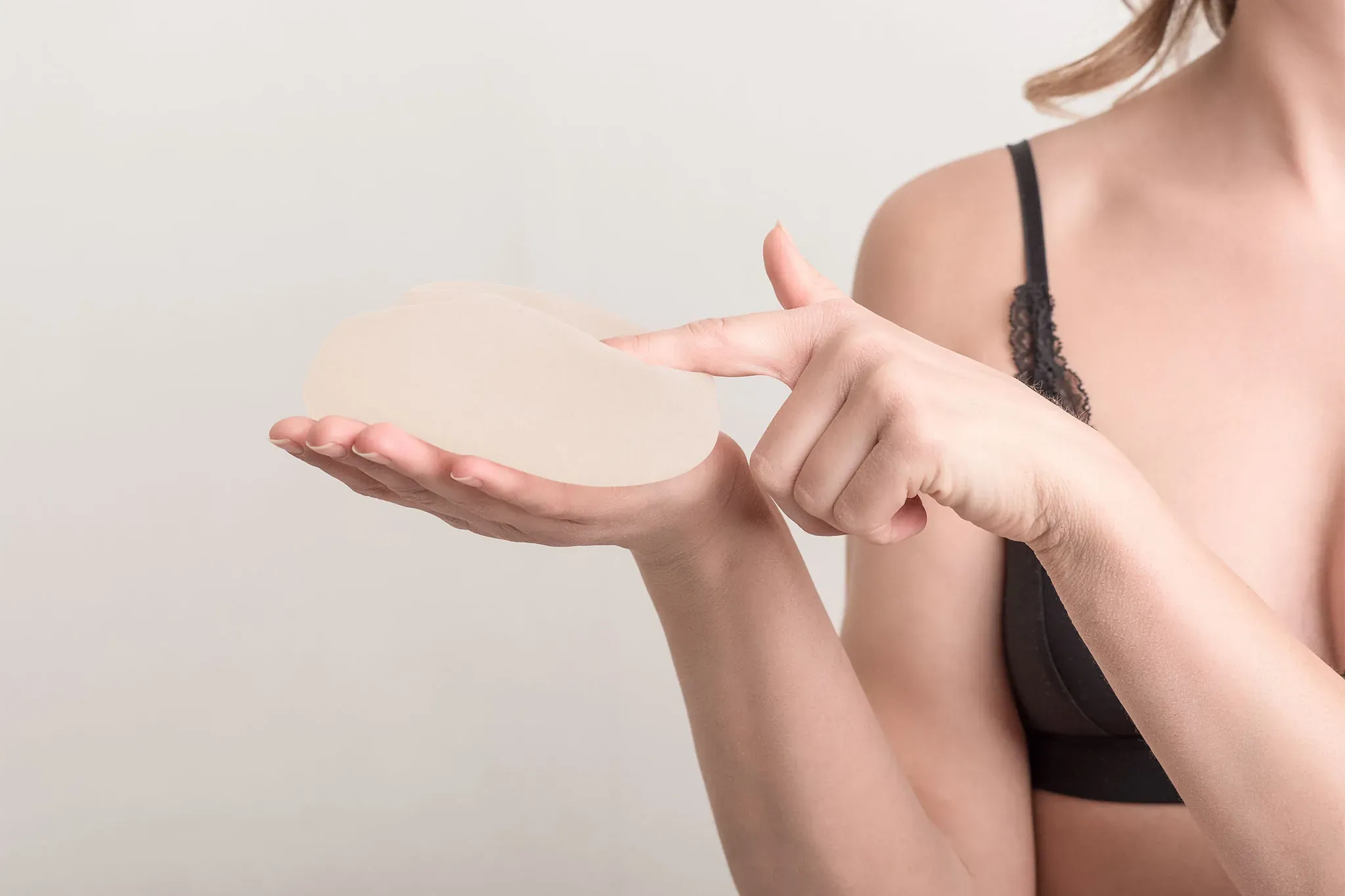
How Long Does a Breast Augmentation Last?
Book an AppointmentA breast augmentation is more than just an aesthetic procedure for many women - it's a personal journey. Perhaps you'd like to restore your earlier silhouette after a pregnancy or significant weight loss, or you simply want more breast volume for a more harmonious sense of your body.
But deciding on a breast augmentation often comes with plenty of questions and uncertainties. One question we hear especially often in consultations: "How long do breast implants actually last?" And: do they inevitably need to be replaced at some point?
What Affects the Lifespan of Your Breast Implants?
How long breast implants last depends on several factors. At BRST, we work with high-quality products and gentle surgical techniques to give you the highest level of safety from the very start.
Implant Quality and Technology
Choosing the right implant is crucial. The latest generation of Motiva implants we work with sets new standards for durability and safety.
We use high-quality Motiva Ergonomix2® implants for all our surgical procedures, known for their exceptional durability and a natural feel.
Depending on the surgical method chosen, special variants such as Motiva Ergonomix2® Diamond are used with the Mia Femtech™ method. These allow for up to 25% more volume compared to conventional implants of the same size. They also maintain a natural breast shape even if they tilt or rotate. "Implant technology has made enormous progress. While earlier models often had to be replaced after a decade, modern implants can easily last 15 to 20 years or even a lifetime."
PD Dr. Rezaeian, Specialist in Plastic and Aesthetic Surgery
Your Body and Personal Factors
Every body changes over time - and that can affect your implants too. The following factors can play a role:
- Pregnancy and breastfeeding - your breast tissue stretches and later recedes again.
- Weight fluctuations - significant changes can affect the natural shape of your breast.
- Natural skin ageing - over time, connective tissue loses elasticity, which can affect the position of the implants.
Surgical Technique and Personal Aftercare
A precise, tissue-preserving surgical technique can significantly extend the lifespan of your breast implants. At our practice, we offer several specialised surgical methods that can be tailored precisely to your individual needs:
- Mia Femtech™: With this innovative method, access is made via the axillary fold. We use special tools such as the channel dissector and inflatable balloon for a particularly gentle procedure. The advantage: the small incision size (approx. 2.5 cm) leads to gentler healing and almost invisible scars. There is also a lower risk of infection or capsular contracture. The procedure can be performed under local anaesthesia with twilight sedation.
- Motiva Preservé™: This advanced method uses access via the inframammary fold. Here too, a channel dissector and inflatable balloon are used. The tissue is simply stretched, so no incision within the breast tissue itself is required. This method preserves the natural breast anatomy and offers maximum stability. Studies show excellent durability with minimal complication rates. This procedure, too, can be performed under local anaesthesia with twilight sedation and takes just half an hour.
- Motiva JOY.(dot)®: With this method, access is also made via the inframammary fold, but using special tools such as a retractor and insertion sleeve for a small, tissue-preserving access point and implant placement without contact to the skin or surgical instruments (no-touch technique). This procedure requires general anaesthesia but offers particular advantages for certain anatomical conditions.
Careful aftercare is just as important as the surgery itself. We accompany our patients closely and for the long term, so they remain happy with their results.
Dr. med Martina Schneider, Specialist in Plastic, Reconstructive & Aesthetic Surgery (FMH)
Is It True That Breast Implants Need to Be Replaced Every 10 Years?
This common assumption is outdated. In the past, replacement after about 10 years was indeed recommended - mainly because of the material quality and technology available at the time. Both have improved and advanced considerably since then.
Today, the following applies:
- Modern Motiva implants easily last 15-20 years or longer.
- As long as no symptoms occur, replacement isn't necessary.
- Regular check-ups help you wear your implants safely for many years.
That said, there are situations where replacement can make sense - we explain which ones below.
How Do You Know When Implant Replacement Might Make Sense?
Replacement doesn't automatically become due after a set amount of time. Rather, there are a few signs you should watch for:
- Pain or persistent tightness - a feeling of pressure can indicate changes.
- Changes in shape or shifting - if your breast appears asymmetrical or the implant has changed position.
- Capsular contracture - a palpable hardening of the tissue around the implant can cause discomfort.
- Damage (especially with older implants) - rare with modern implants, but we recommend a check if you're ever unsure.
- Wanting a change - after a few years, you might simply want a different implant size or shape.
Important: if you notice any of these symptoms, come see us at our practice. We offer a thorough implant check including consultation.
Why Motiva® Implants Are Especially Long-Lasting
Thanks to our years of experience, we rely on state-of-the-art technology that offers you maximum safety and longevity:
- BluSeal+®: a special barrier layer prevents silicone from "leaking" and ensures long-term safety.
- TrueMonobloc+®: this innovative technology combines the shell, patch, and gel into a single structure, significantly increasing implant stability.
- ProgressiveGel ULTIMA®: a highly cohesive silicone gel with special rheological properties for a natural feel and high shape stability.
- SmoothSilk®: the special surface promotes a low inflammatory response and reduces the risk of capsular contracture
- Zen®: passive RFID technology that enables non-invasive implant verification and is safely compatible with all imaging methods.
When Should You Consider Implant Replacement?
- From a medical standpoint: in case of pain, capsular contracture or changes to the implant.
- For aesthetic reasons: if your sense of your body has changed, after pregnancy and breastfeeding or weight loss.
- For your safety: we recommend an ultrasound or MRI every 1-2 years.
Our Conclusion - How Long Does Your Breast Augmentation Really Last?
If you're considering a breast augmentation, you don't need to worry about implant durability. Modern implants last considerably longer than they used to and do not need to be replaced on a fixed schedule. The Motiva® implants we use stand out for their high quality - many women wear them comfortably for 20 years or longer. Regular check-ups give you peace of mind and support long-term satisfaction.
If you have any doubts or questions about your implants, Dr. med. Farid Rezaeian and Dr. med Martina Schneider are here for you at any time, supporting you with our expertise. Arrange a personal consultation at BRST and see our expertise for yourself.


Do you have any questions?
Get in touch with us.