

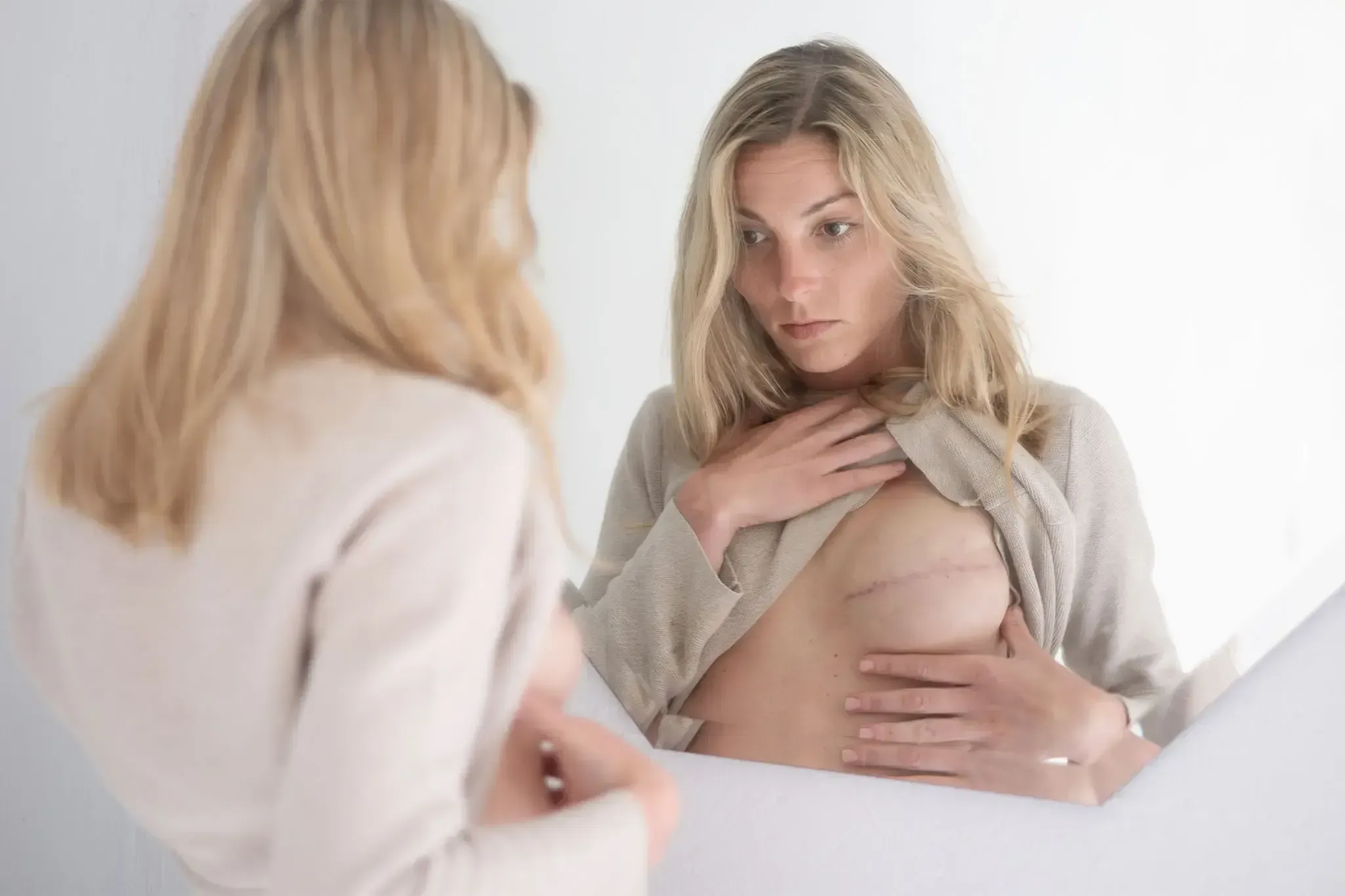
Breast Reconstruction After Breast Cancer: Everything You Need to Know
Book an AppointmentA cancer diagnosis is as profound a turning point in life as almost none other. Fear and worry are ever-present, and sometimes it feels almost impossible to fight the illness. When breast cancer means one or even both breasts must be removed, many women experience this as an almost complete loss of joy in life and their sense of femininity.
What is breast reconstruction?
Breast reconstruction is a surgical procedure that restores the shape and appearance of the breast. It follows the removal of one or both breasts (a mastectomy) or a breast-conserving operation in which only part of the breast tissue was removed. In most cases, this means reconstruction after breast cancer. The goal of every breast reconstruction is to restore a natural, aesthetically pleasing breast contour - usually accompanied by a substantial improvement in the patient’s overall well-being.
What methods of breast reconstruction are there?
Depending on your personal wishes and starting point, there are several different methods for breast reconstruction after breast cancer. To determine the right treatment for you, we recommend a consultation with a specialist in plastic and aesthetic surgery. This consultation is always non-binding. During the conversation, your questions and wishes can be discussed and your physical situation assessed. We are happy to give you an initial overview of your options and the most common treatment methods for breast reconstruction.
Breast prostheses (bra inserts)
Using breast prostheses requires no surgery and is therefore risk-free. These special inserts are placed in a suitable specialist bra. Thanks to modern, high-quality materials, they look particularly natural. The prostheses are available in numerous sizes and shapes. Especially after the removal or reduction of just one breast, this method can help create a harmonious, symmetrical overall appearance. The drawback of this method, however, is that the breast itself remains flat or uneven. It is not a permanent reconstruction.
Breast reconstruction with implants
The most common method of breast reconstruction is with implants. Between 70 and 80% of affected women choose this procedure. As with a purely aesthetic breast augmentation, high-quality implants are placed under the breast skin or the chest muscle, with the focus on a harmonious breast appearance. For this reason, an implant is often placed in the other breast too - even if it was not operated on as part of the tumour treatment. The majority of women are very satisfied with the result of the procedure.
However, breast reconstruction with implants also has drawbacks. The final result is generally less natural-looking than, for example, reconstruction with autologous tissue. There is also a small risk of developing capsular contracture - a hardening of the breast that is usually very uncomfortable for the affected woman and can require a follow-up operation.
Breast reconstruction with autologous tissue
With breast reconstruction using autologous tissue, a distinction is made between fat grafting and flap surgery. For flap surgery, a skin-fat-muscle flap is taken from a suitable area of the body, such as the abdomen, back, buttocks, or thigh, and the tissue obtained is used to reconstruct the breast. This treatment is complex and is only suitable for smaller adjustments. If a larger breast reconstruction using flap surgery is desired, several operations are necessary, and additional scars remain at the sites where the tissue was taken.
In breast reconstruction with fat grafting, the body’s own fat is removed from the abdomen, buttocks, or thighs by liposuction, processed using a special method, and injected into the breast. This treatment is also suitable for a smaller-scale reconstruction. Around 30% of the transplanted fat usually does not survive and is reabsorbed by the body. However, as with flap surgery, the result is generally very harmonious, and the breast ages naturally along with the rest of the body, adapting if you gain or lose weight.
Combination of autologous tissue and implant
This is arguably the most sophisticated and exclusive form of breast reconstruction: the combination of an implant and autologous fat. A suitably sized implant is inserted and a portion of autologous fat is injected, combining the advantages of both options - size and shape from the implant, and softness and protection from the autologous fat.
When is the right time for breast reconstruction after breast cancer?
The right timing for breast reconstruction depends closely on the method you choose. If you opt for reconstruction with an implant, it can be placed during the same procedure as the tumour removal. Reconstruction with autologous fat or flap surgery can take place at the earliest six months after completing cancer treatment. Of course, you can also have the procedure at any later point in time - even if you initially decide against a surgical method.
Who is breast reconstruction after breast cancer suitable for?
One thing upfront: almost every woman can fulfil her wish for breast reconstruction after a breast cancer diagnosis. However, there are a few factors that can prevent the procedure:
- Active cancer: if treatment for breast cancer has not yet been completed, breast reconstruction cannot yet take place.
- Acute health problems: if health issues rule out surgery, treatment should wait until your health has improved again.
- Psychological strain: especially after a cancer diagnosis, the mind also needs time to recover. Give yourself time, and only start breast reconstruction once you feel ready.
- Smoking: smoking poses a high risk to proper wound healing. If you are not willing to give up smoking, the operation cannot be performed.
What is the process for breast reconstruction?
Breast reconstruction follows a similar process to a regular breast augmentation. Everything begins with an in-depth, personal consultation with your specialist in plastic and aesthetic surgery, who will explain all the important steps before, during, and after the operation. If you choose reconstruction with an implant, this can be combined with the tumour removal, so two separate procedures are not necessary. After the operation, adequate physical rest is essential - avoid sport and direct sun exposure. As additional support, you will wear a special support bra for the first few months, and you should also make use of regular follow-up appointments with your surgeon.
What are the risks?
Breast reconstruction is a surgical procedure on your body. Complications such as infections or wound healing problems are very rare, but they can occur. If you choose breast implants, there is also a risk of capsular contracture. If you choose reconstruction with autologous fat or flap surgery, you should expect additional scars at the sites where the tissue was taken.
New confidence after breast cancer with the right breast reconstruction
The female breast is often closely tied to a woman’s self-image. Women identify their own well-being with their breasts, and if a breast must be removed due to cancer, this is often a heavy blow to self-confidence and overall quality of life. Both can be restored through breast reconstruction after breast cancer. Reconstruction with implants offers the possibility of a substantial increase in size, while reconstruction with autologous tissue delivers the most natural results and usually lasts a lifetime. A combination of both methods is also possible. Let a specialist in plastic and aesthetic surgery guide you on your path. The team at BRST AG is dedicated to your well-being and to achieving outstanding results. We accompany you every step of the way, with full understanding and expertise. We look forward to your message.

Do you have any questions?
Get in touch with us.